Julia presents various ways to carry out linear regressions. In this previous post, I explained how to run linear regression in Julia using the function linreg(). Unfortunately, linreg() is deprecated and no longer exists in Julia v1.0.
In this post I will present how to use the native function of Julia to run OLS on the following model
Multicollinearity is a common problem in econometrics. As explained in a previous post, multicollinearity arises when we have too few observations to precisely estimate the effects of two or more highly correlated variables on the dependent variable. This post tries to graphically illustrate the problem of multicollinearity using venn-diagrams. The venn-diagrams below all represent the following regression model Continue reading Graphically Illustrate Multicollinearity: Venn Diagram→
Multicollinearity or collinearity refers to a situation where two or more variables of a regression model are highly correlated. Because of the high correlation, it is difficult to disentangle the pure effect of one single explanatory variables on the dependent variable . From a mathematical point of view, multicollinearity only becomes an issue when we face perfect multicollinearity. That is, when we have identical variables in our regression model. Continue reading The Problem of Multicollinearity→
In STATA one can estimate a linear regression using the command regress. In this post I will present how to use the STATA function regress to run OLS on the following model
The omitted variable bias is a common and serious problem in regression analysis. Generally, the problem arises if one does not consider all relevant variables in a regression. In this case, one violates the third assumption of the assumption of the classical linear regression model. The following series of blog posts explains the omitted variable bias and discusses its consequences.
Julia presents various ways to carry out multiple regressions. One easy way is to use the lm() function of the GLM package. In this post I will present how to use the lm() and run OLS on the following model
A linear regression is a special case of the classical linear regression models that describes the relationship between two variables by fitting a linear equation to observed data. Thereby, one variable is considered to be the explanatory (or independent) variable, and the other variable is considered to be the dependent variable. For instance, an econometrician might want to relate weight to their calorie consumption using a linear regression model.
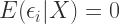
One reason why the omitted variable leads to biased estimates is that omitting a relevant variable violates assumption 3 of the necessary assumptions of the classical regression model that states that all explanatory variables must be exogenous, i.e.


 on the dependent variable
  . From a mathematical point of view, multicollinearity only becomes an issue when we face perfect multicollinearity. That is, when we have identical variables in our regression model.

 Economic Theory Blog