
One year ago, my blog reached the minimum traffic requirement of WordAds and the advertising platform added my blog to their program. Starting October 2017, I was able to display ads on my blog and earn part of the generated income. At the beginning, I was very excited. However, after few enthusiastic months, I soon realized that I will not be able to earn lots of money using WordAds. Sure, displaying adds earns some money, but compared to my regular salary, it is negligible.
Continue reading WordAds Review 2018All posts by AV
Generate Gamma Distributed Numbers in Julia
In Julia, one can generate random numbers that follow a Gamma distribution by using the Distribution package. Thereby one can use the rand() function that draws random numbers and specify the Gamma distribution by using the Gamma(a,b) command. The parameters a and b define the shape parameters of the Gamma distribution. This article provides a more generic overview of how to generate random numbers in Julia.
Continue reading Generate Gamma Distributed Numbers in Julia
Aggregate Demand
What is aggregate demand? Aggregate demand refers to total expenditure in an economy in a certain period. That is, aggregate demand comprises everything that is spend in an economy in one period. One can split aggregate demand into different subcomponents. Formally, one can describe aggregate demand (Y) as
Y = C + I + G + NX
As one can see from the equation above, aggregate demand (Y) is equal consumption (C) plus investment (I) plus government spending (G) plus net exports (NX), i.e. how much we are selling abroad to other countries on net.
According to Keynesian theory, aggregate demand determines the amount of available expenditure in an economy. Now, why should one care about available expenditure? Well, in Keynesian economics, available expenditure determines the amount of means available in an economy in order to sustain labor hires in a given period. That is, in the Keynesian model, the available expenditures is what keeps people at work. Boldly speaking, the amount of expenditure defines the amount of available money to pay the wages of workers. This concept is particularly important during a recession. Assume for instance, that a shock hits the economy and aggregate demand decreases. This implies that demand for firms’ products drops and firms will sell less products and earn less money. Hence, at the end of the month firms have less money available to pay their employees. Meaning that firms will be forced to lay off some workers and unemployment increases. Hence, in a Keynesian setting, a drop in aggregate demand implies a decrease in the means available in an economy, leading to less jobs and higher unemployment.
Continue reading Aggregate DemandKeynesian Economics
Keynesian Economics is a central doctrine in economics that forms the foundation of modern macroeconomic thinking. It was established by John Maynard Keynes during the 1930s. In 1936, the British economist published his book “The General Theory of Employment, Interest and Money” that forms the basis of the Keynesian school. The following series of blog posts will introduce Keynesian Economics, provide useful insights and discuss the most important concepts. The first post is dedicated to aggregate demand, the key concept of Keynesian Economics. The following post explains the dynamics of Keynesian Economics in an aggregate supply/ aggregate demand (AS-AD) model. The third post discusses the remedies of Keynesian Economics in the light of a recession. Finally, the last post elaborates some drawbacks of Keynesianism.
Continue reading Keynesian EconomicsDerivation of the Least Squares Estimator for Beta in Matrix Notation – Proof Nr. 1
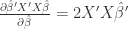
In the post that derives the least squares estimator, we make use of the following statement:

This post shows how one can prove this statement. Let’s start from the statement that we want to prove:
Continue reading Derivation of the Least Squares Estimator for Beta in Matrix Notation – Proof Nr. 1
How to save Objects/Data in Julia?
How can one save objects in Julia? One easy way to do so it to use the JLD package. The following examples demonstrates how to save data objects in Julia and how to load the once they are saved.
How to set a Seed in Julia?
Julia v0.7 and older
In Julia, you can set a seed to the random number generator using the srand() function. The code example below sets the seed to 1234. Generating a random variable with rand(1) after setting the seed to 1234 will always generate the same number, i.e. it will always return 0.5908446386657102.
Upgrade Debian 8 to 9
In this post I am going to explain how to upgrade Debian 8 to Debian 9. You can enter the following eight steps in your terminal: Continue reading Upgrade Debian 8 to 9
Graphically Illustrate Multicollinearity: Venn Diagram
Multicollinearity is a common problem in econometrics. As explained in a previous post, multicollinearity arises when we have too few observations to precisely estimate the effects of two or more highly correlated variables on the dependent variable. This post tries to graphically illustrate the problem of multicollinearity using venn-diagrams. The venn-diagrams below all represent the following regression model Continue reading Graphically Illustrate Multicollinearity: Venn Diagram
Omitted Variable Bias: An Example
This post is part of the series on the omitted variable bias and provides a simulation exercise that illustrates how omitting a relevant variable from your regression model biases the coefficients. The R code will be provided at the end. Continue reading Omitted Variable Bias: An Example
 Economic Theory Blog